
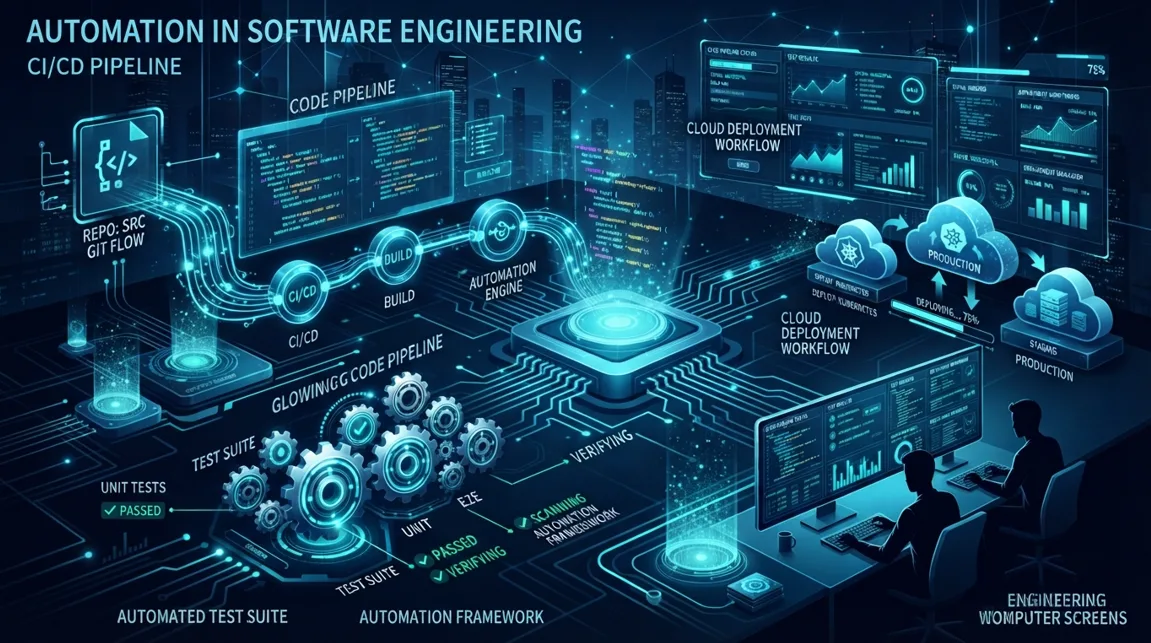
Software engineering has undergone a massive transformation over the past decade. What once required manual code compilation, tedious overnight testing, and high-risk weekend deployments has evolved into a streamlined, high-velocity discipline. At the heart of this shift is automation—the practice of using tools, scripts, and intelligent systems to perform repetitive tasks with minimal human intervention.
Today, automation is no longer a luxury reserved for tech giants; it is a foundational pillar of modern software development.
Key Areas Where Automation Shines
1. Continuous Integration and Continuous Deployment (CI/CD)
CI/CD pipelines are the backbone of modern engineering teams. Every time a developer pushes code to a repository, automated workflows trigger builds, run checks, and deploy updates to staging or production environments. Tools like GitHub Actions, GitLab CI, and Jenkins eliminate manual deployment errors and allow teams to release features multiple times a day rather than once a quarter.
2. Automated Testing
Manual testing cannot keep pace with rapid release cycles. Automated unit, integration, and end-to-end tests verify that new changes do not break existing functionality. Frameworks such as Playwright, Cypress, PyTest, and JUnit give developers immediate feedback, catching bugs minutes after code is written rather than weeks later in production.
3. Infrastructure as Code (IaC)
Provisioning servers, configuring networks, and managing cloud resources manually is slow and prone to configuration drift. With Infrastructure as Code tools like Terraform, Ansible, and AWS CloudFormation, teams define their entire infrastructure in version-controlled configuration files—making environments reproducible, scalable, and auditable.
4. AI-Assisted Coding and Code Reviews
The newest frontier in software automation is powered by artificial intelligence. AI coding assistants help generate boilerplate code, suggest optimizations, and write unit tests. Meanwhile, automated static analysis and security scanning tools (like SonarQube and Snyk) inspect pull requests for vulnerabilities, code smells, and style violations before a human reviewer even looks at the code.
The Core Benefits of Engineering Automation
- Faster Time-to-Market: Automated pipelines shrink the gap between writing code and delivering value to end users.
- Higher Code Quality and Reliability: Consistent, repeatable checks reduce human error and prevent regressions.
- Improved Developer Productivity: By offloading repetitive maintenance and operational chores, engineers can focus on architecture, problem-solving, and innovation.
- Enhanced Security: Automated dependency updates and vulnerability scans ensure security is baked into every stage of the software lifecycle (DevSecOps).
Balancing Automation with Human Judgment
While automation accelerates delivery, it is not a silver bullet. Over-automating poorly understood processes only produces bad results faster. Flaky test suites can erode trust, and poorly configured deployment pipelines can propagate bugs to production at record speed. Successful engineering teams treat their automation scripts and pipelines with the same care, testing, and documentation as their core product code.
Looking Ahead
As software systems grow more complex, automation continues to evolve toward self-healing infrastructure, autonomous debugging agents, and predictive monitoring. Embracing automation does not replace software engineers—it empowers them to build more resilient, scalable, and impactful software than ever before.


Comments (0)
Sign in to join the conversation.
No comments yet. Be the first to share your thoughts.