
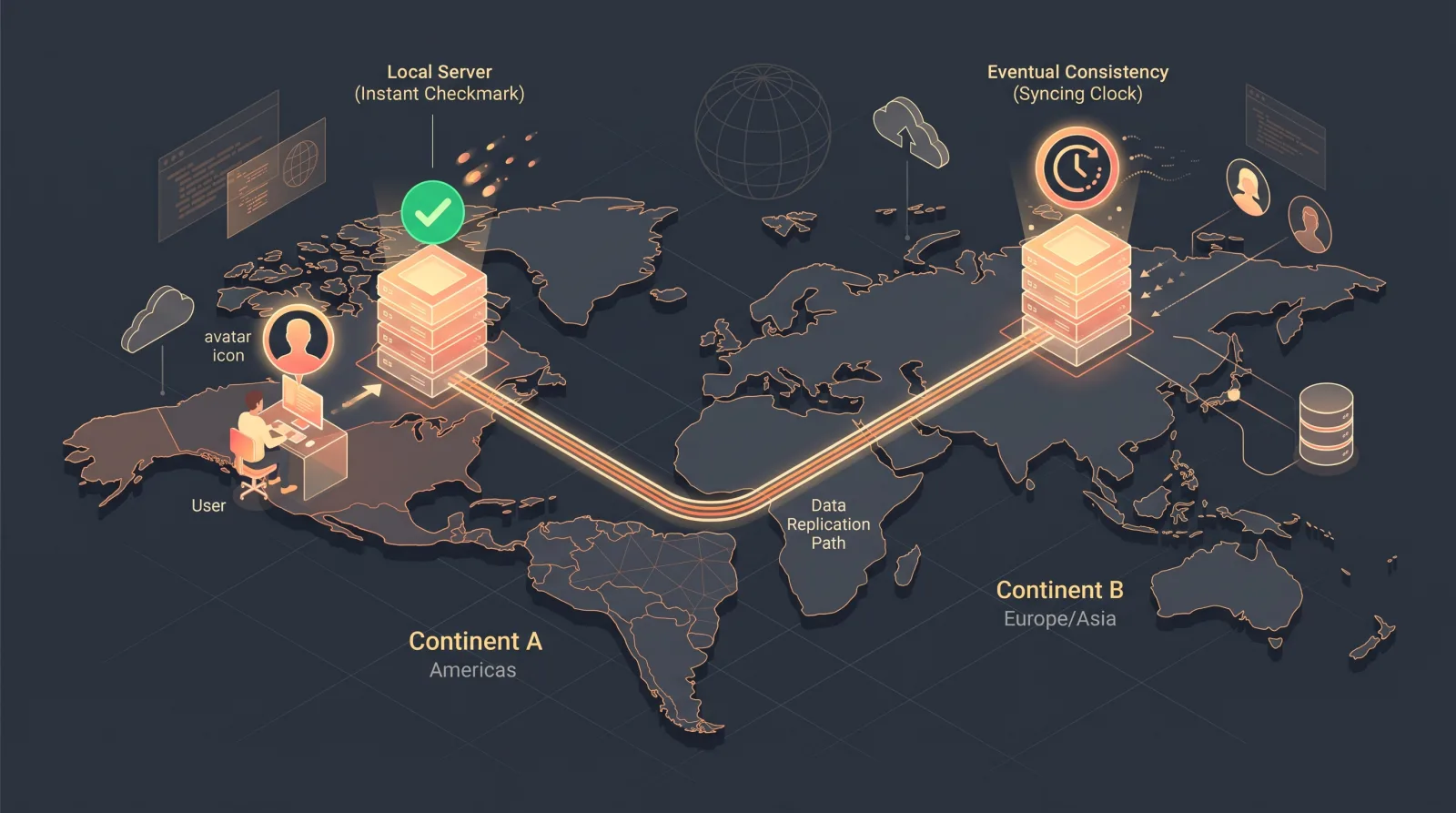
The Illusion of Instant Updates
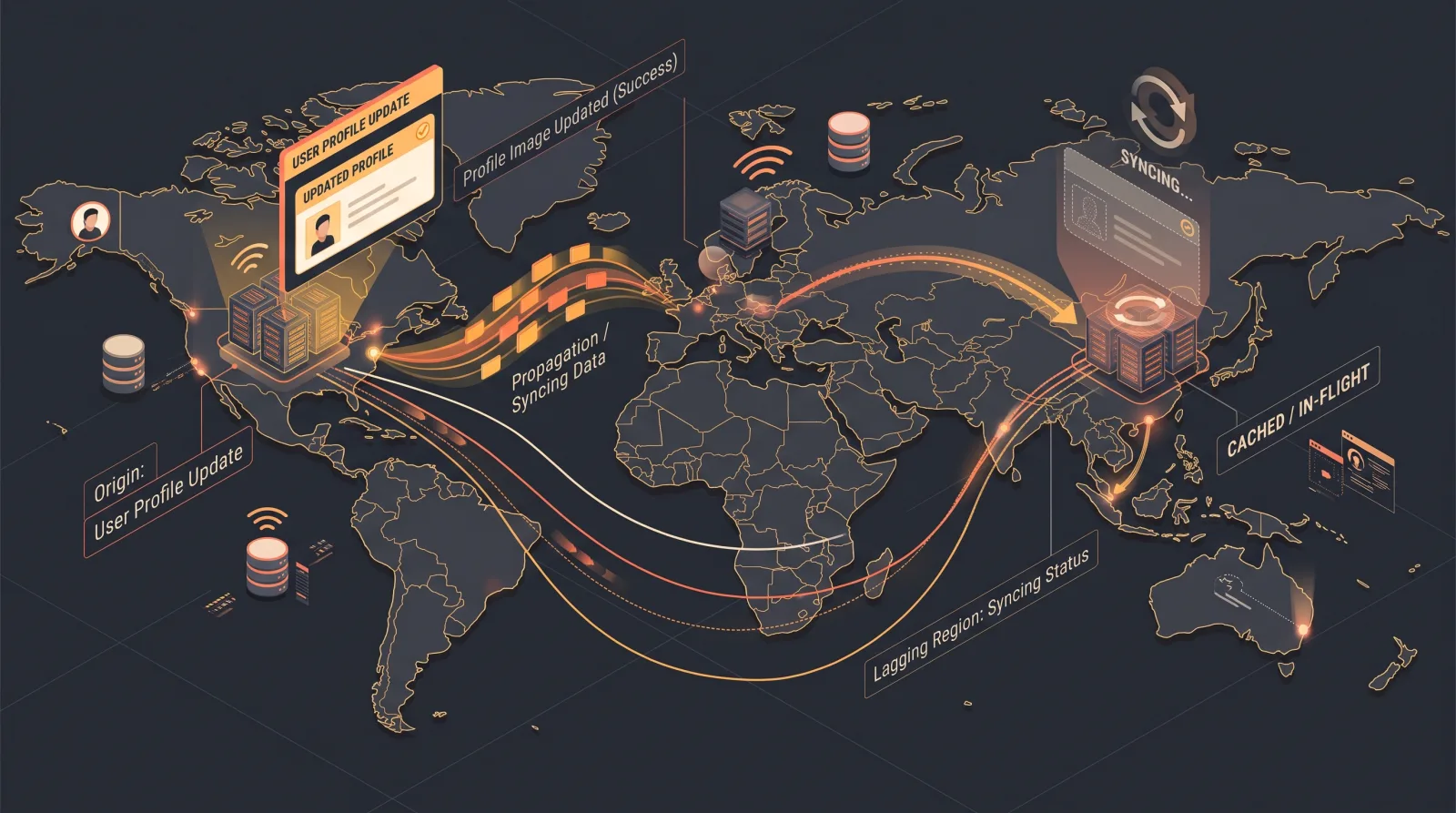
Have you ever updated your profile photo on LinkedIn, changed your bio on Instagram, or posted a status update—only for a friend sitting right next to you to see your old photo for a few seconds?
You might assume the app is glitching or your friend has a slow internet connection. In reality, you are witnessing one of the most intentional architectural trade-offs in modern cloud engineering: Eventual Consistency.
To serve millions of users simultaneously with lightning speed, global platforms deliberately copy your data across dozens of datacenters worldwide. Because information cannot travel faster than the speed of light through undersea fiber cables, those copies take a brief moment to synchronize.
Why Cloud Apps Copy Data Across the Globe
If a social media platform stored all user profiles on a single master server in one city, two major problems would happen:
- Catastrophic Single Point of Failure: If that datacenter lost power or suffered a hardware crash, the entire platform would go offline globally.
- Painful Network Lag: A user opening the app from Lahore or Tokyo would have to wait for their request to travel halfway across the planet and back every time they tapped their screen.
To solve this, cloud architects use Data Replication—keeping identical copies of your data on servers across multiple regions. When you open an app, it connects you to the nearest local server so pages load in milliseconds.
A Real-Life Analogy: The Three News Agency Whiteboards
Imagine a national news agency with branch offices in Islamabad, Lahore, and Karachi, each displaying a whiteboard with live commodity prices.
- At 2:00 PM, a reporter in Islamabad writes on the local whiteboard: "Gold Price: 250,000 PKR".
- The Islamabad office immediately dispatches messages to Lahore and Karachi so they can update their boards.
- At 2:01 PM, a trader in Lahore walks in and sees the updated price.
- At that exact same minute, a trader in Karachi checks their board, but the update message is still delayed in transit—so the Karachi board still reads "240,000 PKR".
If the agency locked all office doors until every single whiteboard across the country was updated simultaneously,customers would be stuck waiting outside in frustration. Instead, they keep the doors open so everyone gets fast service,accepting that distant branches might lag behind by a brief moment.
Strong Consistency vs. Eventual Consistency
Not every digital service handles this synchronization delay the same way. Depending on what is at stake, engineers choose between two primary approaches:
- Strong Consistency (Zero Tolerance for Stale Data): Once an update is saved, every user anywhere in the world immediately sees the new data. If a server hasn't received the update yet, it forces the user to wait or blocks the request. This is mandatory for online banking, stock trading, and flight seat reservations, where seeing an outdated balance could cause double-spending.
- Eventual Consistency (Speed and Uptime First): The server saves your update locally, immediately confirms "Saved!", and quietly copies the change to other servers in the background. If no new changes are made, all servers eventually hold the exact same information. This powers social media feeds, video view counters, and e-commerce product catalogs, where ultra-fast page loads matter far more than momentary accuracy.
Protecting the User Experience: Client-Centric Guarantees
Even when an app uses Eventual Consistency behind the scenes, engineers enforce smart rules so the platform never feels broken to the person using it:
- Read-Your-Writes Consistency: Once you upload a new profile picture or edit a post, you will always see your own update immediately on refresh—even if your friends on different servers still see the older version for a few seconds.
- Monotonic Reads (Time Never Moves Backward): Imagine refreshing your email inbox and seeing 5 unread messages, then refreshing again and seeing only 3 because your phone routed to a slower backup server. Monotonic reads prevents this jarring bug by ensuring once you see newer data, the system will never serve you an older snapshot.
- Writes-Follow-Reads (Preserving Conversations): In a group chat or comment thread, if Alice asks a question and Bob posts an answer, no user will ever see Bob's reply appear above Alice's original question.
Summary: Speed vs. Strictness
- Strong Consistency: Best for financial ledgers, inventory locks, and critical transactions where accuracy outweighs response speed.
- Eventual Consistency: Best for global web apps, social networks, and content delivery where instant responsiveness and 24/7 availability keep billions of users connected seamlessly.
Comments (0)
Sign in to join the conversation.
No comments yet. Be the first to share your thoughts.